
How can climate cafés benefit students?
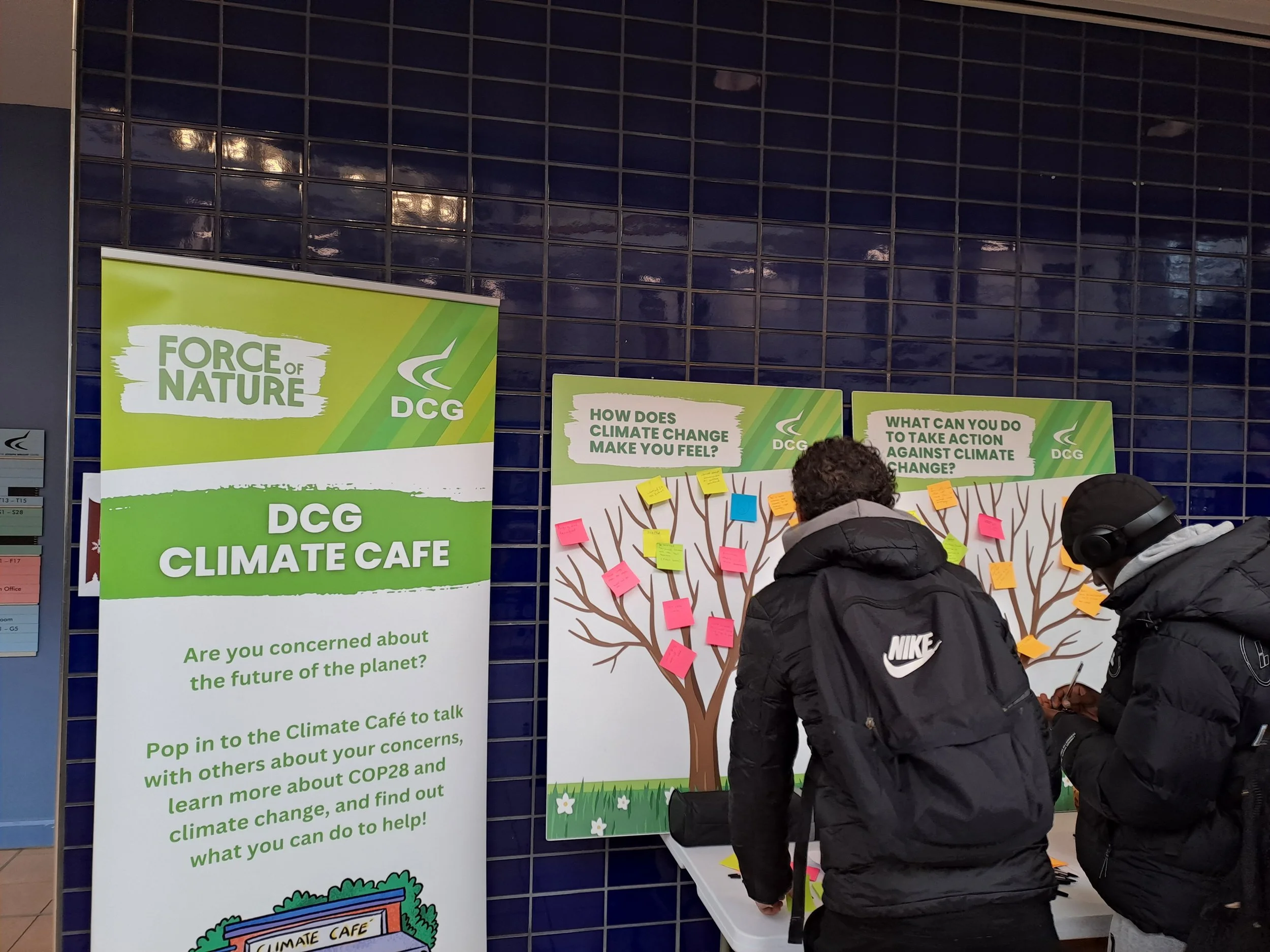
Students at a Derby College climate café.
“Climate cafés have put climate change on the map at Derby College.”
Climate cafés are hosted all over the world, in over 50 countries and in a variety of settings, such as faith spaces, shops, community centres and climate change conferences. In this blog, we’re going to look at how climate cafés work in educational institutions, with the help of Mollie Cox, Environmental and Sustainability Officer at Derby College, UK.
Why do students need climate cafés?
The Compass Project (2026) found that in schools and colleges, 55% of students were very worried about climate change, and in universities, 84% of students were very worried. Almost half (49%) of university students said their feelings about climate change affected their daily life, such as sleeping and studying.
Climate cafés are an important step in supporting the wellbeing of students in the face of the climate crisis.
When were climate cafés introduced to Derby College?
Climate cafés were introduced by Mollie in 2023. Mollie joined the college just before the COP28 and decided it was the perfect opportunity to raise awareness of climate change among Derby College’s 14,000+ students.
What do climate cafés look like for the students?
In a typical climate café at Derby College, you’ll find a metal board with trees on it with a question at the top for students to respond to using post-it notes. For example, “How does climate change make you feel?”
Mollie usually sees a lot of feelings expressed by the students: anxiety, depression, worry. That’s where the second board comes in - “What action can you take to help climate change?” The goal of this second board is to empower the students and help them feel hopeful.
The students are then encouraged to make conversation with one another based on what they shared.
At first, the climate cafés were held in a designated meeting space, but to encourage more people to engage, they moved them to high-footfall areas during lunchtimes and breaks. This way, more people are exposed to the concept of climate cafés.
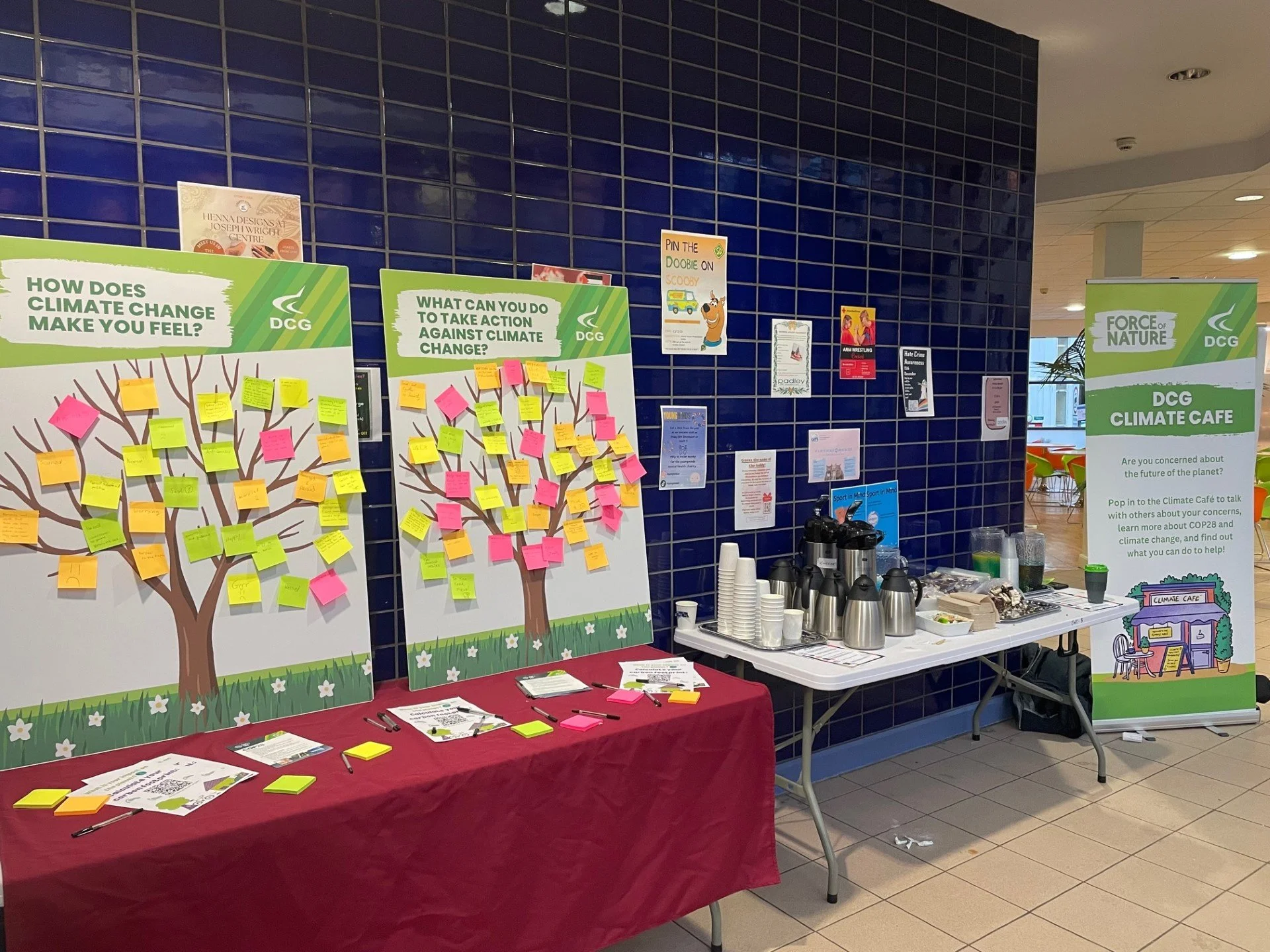
Climate café set up at Derby College.
How many climate cafés have been hosted at Derby College?
Since the end of 2023, over 15 climate cafés have been held, each reaching around 50 students. They run cafés every November during COP and throughout Green Week in March.
How do students at Derby College feel about the climate crisis?
From over 200 responses, they found that 74% of students felt either anxious, sad, frustrated, or concerned about climate change, while the rest felt apathetic, powerless, hopeless, overwhelmed, or disappointed.
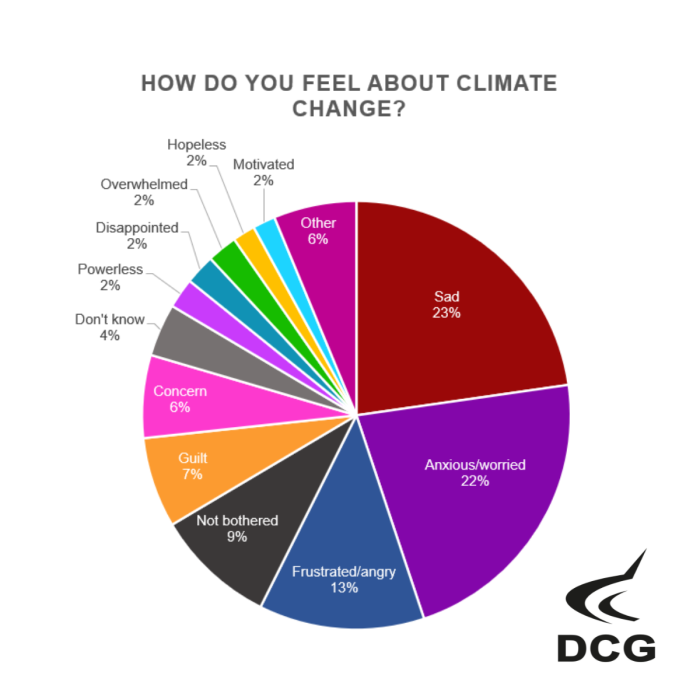
Results from a survey of ~200 students who attended a climate café at Derby College.
Have climate cafés impacted your students?
They’ve created countless conversations among students and teachers and have shown that at whatever stage you are in your learning journey, it’s pivotal to have space to connect with how you feel.
They are an incredible way to connect with students, to understand not just what they know, but how they feel about climate change. If we want students to engage with climate change, they need to know they have a safe space to express their emotions that will support their wellbeing.
“The response was really positive, more so than I thought it was going to be! With starting something new, you don’t know how many people are going to be interested but I was quite lucky that a lot of colleagues helped me set the events up”
Are you worried that students will feel worse after a climate café?
They’re not afraid of people walking away from climate cafés feeling worried or concerned - that is a natural response in the face of the climate crisis. However, it is empowering and encouraging for students to see where action is being taken, and it’s important they leave feeling they can do something about it. Mollie tries to share some positive news at the end of every climate café.
What advice do you have for other schools, colleges and universities looking to host climate cafés?
Learn from doing and don’t be disappointed if it doesn’t go perfectly the first time. Sometimes people don’t turn up but they adjust and keep going. Even if students come along and stay for 5 minutes and have one conversation about climate change, they’ve still thought about it more than they would have on a normal day.
They provide refreshments to draw in students who might not otherwise attend - a biscuit and a cup of tea go a long way.
Mollie suggests using the Force of Nature resources, especially when you’re just getting started. Sign up to host a climate café to access the free guide.
How do you engage students?
In her time as the Environmental and Sustainability Officer at Derby College, Mollie has come across lots of students who didn’t know what climate change was (and some who even thought it was a good thing).
Mollie says it’s important not to invalidate people’s comments and perspectives. Try to understand them, rather than to correct them.
To engage a wider audience, try relating the climate crisis to their area of study to demonstrate that climate change is relevant beyond science and geography.
Also, avoid using jargon. Use approachable terms, e.g. climate change rather than climate crisis.
“Its about making everyone feel heard.”
If you’d like more support on how to host a climate café for students, get in touch with hello@forceofnature.xyz.
